


How to Tell if You Have Depression: Signs, Symptoms, and When to Seek Help

Depression is more than feeling sad for a few days—it’s a serious mental health condition that can impact your mood, energy, sleep, relationships, and daily functioning. Many people wonder: “Do I have depression, or am I just going through a tough time?” Knowing the difference can help you get the right support and treatment.
In this post, we’ll explore the common signs of depression, how to recognize it in yourself, and when it might be time to talk to a professional.
What is Depression?
Depression, also known as major depressive disorder, is a mental health condition characterized by persistent feelings of sadness, emptiness, or hopelessness. Unlike temporary sadness, depression lasts two weeks or longer and can interfere with work, relationships, and overall quality of life.
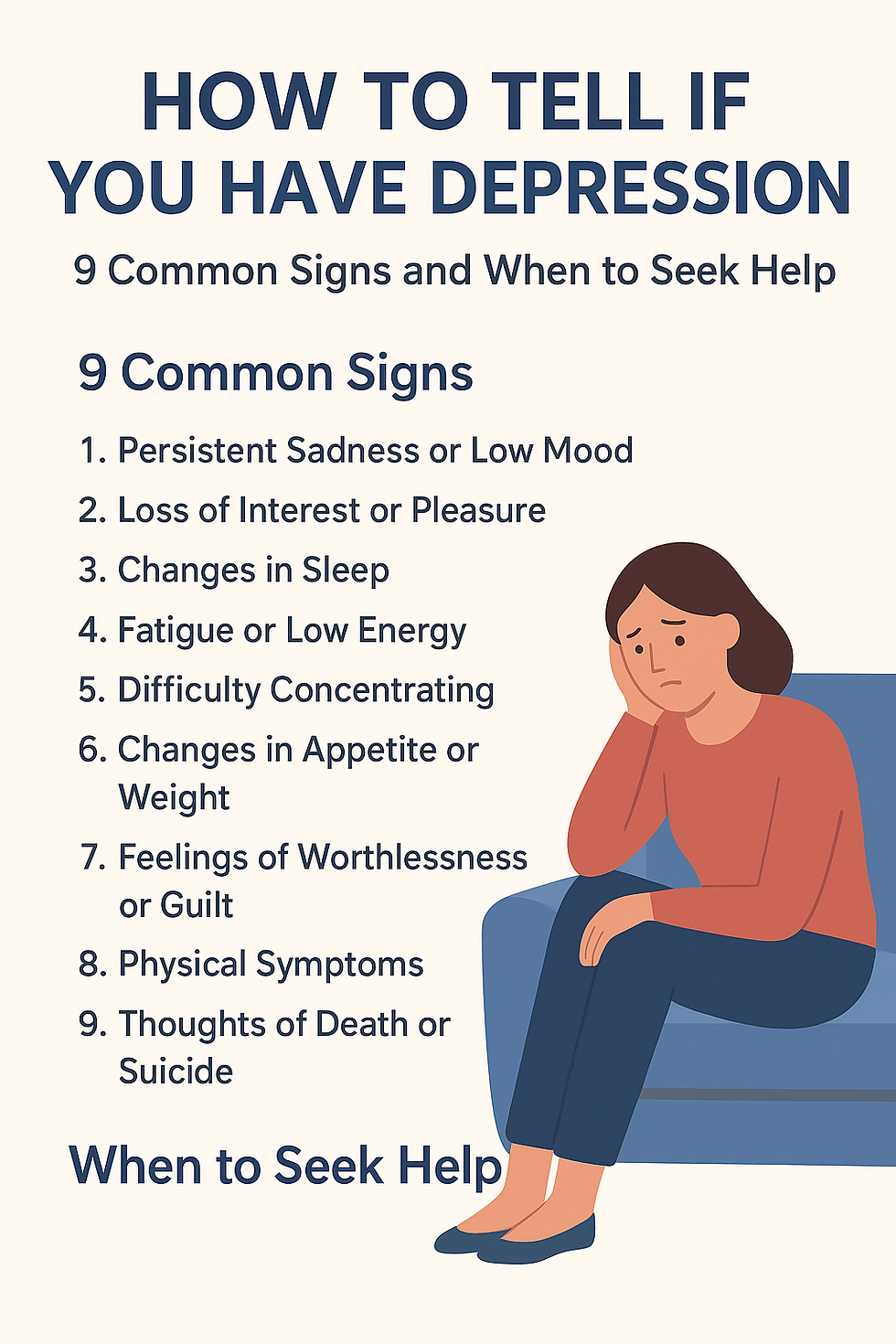
Common Signs and Symptoms of Depression
If you’re wondering whether you may be experiencing depression, here are the most common symptoms:
1. Persistent Sadness or Low Mood
Feeling down, tearful, or hopeless most of the day, nearly every day.
2. Loss of Interest or Pleasure (Anhedonia)
Activities that once brought joy—hobbies, socializing, exercise—no longer feel appealing.
3. Changes in Sleep
Both insomnia (difficulty falling or staying asleep) and hypersomnia (sleeping too much) are common with depression.
4. Fatigue or Low Energy
Even small tasks can feel exhausting or overwhelming.
5. Difficulty Concentrating
Trouble focusing, remembering details, or making decisions.
6. Changes in Appetite or Weight
Some people eat less and lose weight, while others crave comfort foods and gain weight.
7. Feelings of Worthlessness or Guilt
Harsh self-criticism, excessive guilt, or a sense of failure.
8. Physical Symptoms
Headaches, digestive problems, or unexplained aches and pains without a clear medical cause.
9. Thoughts of Death or Suicide
In severe cases, depression can bring intrusive thoughts of not wanting to live or feeling like a burden.
When to Seek Professional Help
Everyone has tough days, but if you notice five or more of these symptoms lasting for two weeks or longer, it may be depression. If your symptoms are interfering with work, relationships, or daily life—or if you’re experiencing thoughts of suicide—it’s important to seek help right away.
Treatment for depression can include therapy, medication, lifestyle changes, or a combination of these approaches. The good news is that depression is highly treatable, and reaching out is the first step toward feeling better.
Self-Reflection Questions to Ask Yourself
Have I lost interest in things I used to enjoy?
Do I feel tired or hopeless most days?
Have my sleep or appetite patterns changed significantly?
Do I struggle to focus or stay motivated?
Are my symptoms interfering with my daily life?
Answering “yes” to several of these may be a sign it’s time to reach out for support.
Final Thoughts
Depression looks different for everyone, but recognizing the signs is the first step toward healing. If you think you may have depression, you don’t have to face it alone—help is available, and getting back to the YOU you used to be is possible.


Comments