


How to Tell If You Have an Anxiety Disorder

Everyone feels anxious from time to time — before a big presentation, during a conflict, or when life feels uncertain. But when anxiety starts to take over your thoughts, body, and daily functioning, it may be more than just stress — it could be an anxiety disorder.
Understanding Anxiety vs. an Anxiety Disorder
Anxiety is a normal human emotion that alerts us to danger or helps us prepare for challenges. It's a cue to check in with yourself. However, an anxiety disorder occurs when that worry or fear becomes persistent, excessive, and difficult to control — even when there’s no immediate threat.
Common Signs You Might Have an Anxiety Disorder
You might be dealing with an anxiety disorder if you notice:
Constant worry or rumination that feels impossible to turn off
Physical symptoms such as muscle tension, racing heart, stomach discomfort, or restlessness
Sleep difficulties, like trouble falling asleep or waking up with worry
Avoidance behaviors, such as steering clear of social situations, work tasks, or anything that triggers anxiety
Irritability or feeling “on edge” much of the time
Difficulty concentrating or feeling like your mind goes blank
These symptoms can show up differently for everyone. Some people experience panic attacks, while others feel chronic unease or “what if” thinking that never seems to stop.
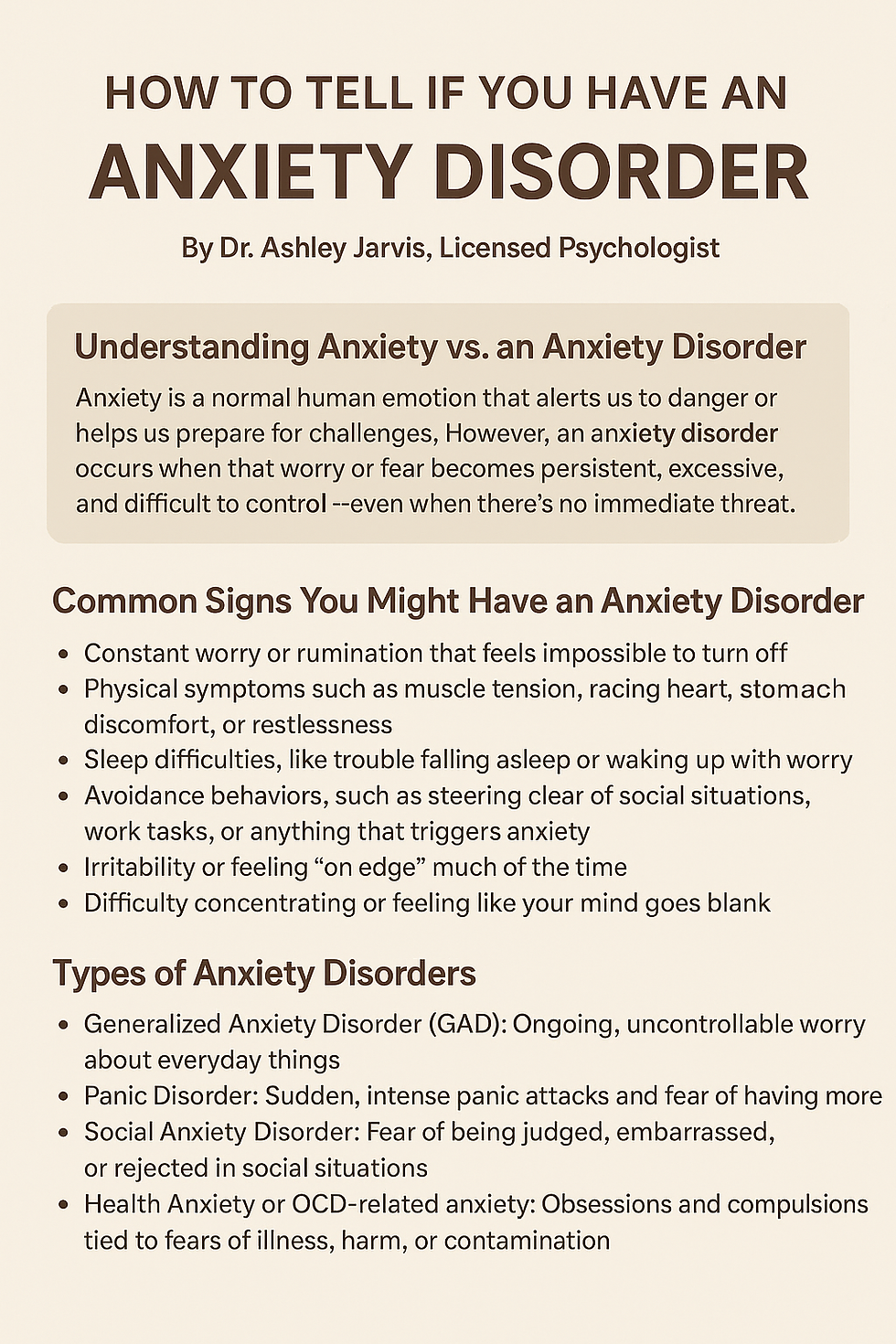
Types of Anxiety Disorders
There are several forms of anxiety disorders, including:
Generalized Anxiety Disorder (GAD): Ongoing, uncontrollable worry about everyday things.
Panic Disorder: Sudden, intense panic attacks and fear of having more.
Social Anxiety Disorder: Fear of being judged, embarrassed, or rejected in social situations.
Health Anxiety or OCD-related anxiety: Obsessions and compulsions tied to fears of illness, harm, or contamination.
When to Seek Help
It might be time to reach out for professional support if your anxiety:
Feels constant or overwhelming
Interferes with work, relationships, or sleep
Leads to avoidance or isolation
Causes physical distress or panic
Feels out of proportion to actual events
Therapy can help you understand what fuels your anxiety and learn tools to manage it effectively. Approaches like CBT (Cognitive Behavioral Therapy) and ACT (Acceptance and Commitment Therapy) are evidence-based treatments that help people change their relationship with anxious thoughts and emotions rather than being controlled by them.
You Don’t Have to Manage Anxiety Alone
If you’re in Colorado or Georgia and wondering whether your anxiety is “normal” or something more, you don’t have to figure it out by yourself. A therapist can help you clarify what’s going on, identify triggers, and create a plan for meaningful change.
Ready to start feeling more in control? Contact Dr. Ashley Jarvis to get started!


Comments