


Living with ADHD: How CBT Can Help

Updated: Oct 20, 2025
Understanding ADHD and Its Challenges
ADHD, or Attention Deficit Hyperactivity Disorder, affects adults in various ways. It can lead to difficulties in maintaining focus, organizing tasks, and regulating emotions. These challenges can impact both personal and professional aspects of life. Understanding these difficulties is the first step toward finding effective solutions.
What Is CBT?
CBT is a structured, goal-oriented form of therapy. It focuses on the connection between thoughts, emotions, and behaviors. For individuals with ADHD, CBT helps identify unhelpful thought patterns, such as “I’ll never be organized.” It encourages replacing these thoughts with more realistic and empowering ones, like “I can create a simple system that works for me.”
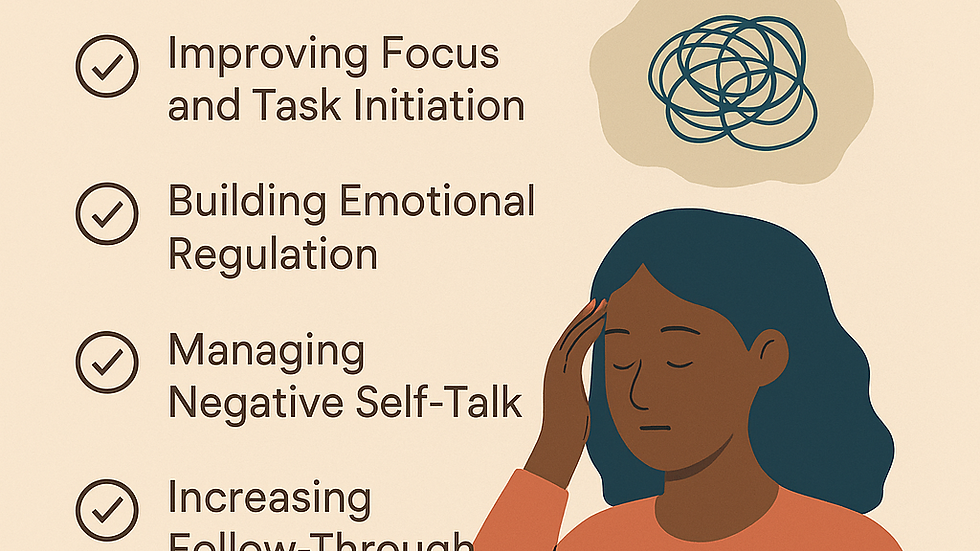
How CBT Supports ADHD Symptoms
Improving Focus and Task Initiation
CBT teaches strategies to break large tasks into manageable steps. It also helps challenge procrastination-driven thoughts that lead to avoidance. By learning to tackle tasks one step at a time, adults with ADHD can improve their focus and productivity.
Building Emotional Regulation
Adults with ADHD often experience emotional sensitivity and frustration. CBT builds awareness of emotional triggers. It offers coping techniques such as mindfulness, cognitive reframing, and relaxation skills. These tools help manage emotions effectively.
Managing Negative Self-Talk
Many people with ADHD internalize years of criticism or perceived “failures.” CBT helps reframe these patterns into balanced, compassionate self-statements. This shift supports growth rather than shame, fostering a healthier self-image.
Increasing Follow-Through and Accountability
CBT can be paired with behavioral strategies. These include scheduling, reminders, and reward systems. Such strategies strengthen executive functioning and consistency, making it easier to follow through on tasks.
Integrating CBT Tools into Daily Life
Small, consistent changes often make the biggest impact. Here are some practical tips to integrate CBT tools into your daily routine:
Use Visual Reminders: Planners and visual cues can help externalize memory tasks.
Practice Mindfulness: Daily mindfulness or breathing techniques can enhance focus and emotional regulation.
Set Realistic Goals: Break down larger goals into bite-sized, achievable tasks.
Weekly Check-Ins: Review your wins and setbacks with curiosity, not judgment. This reflection can provide valuable insights.
Want Practical Tools to Support Your CBT Practice?
If you’re looking for therapy worksheets, ADHD planning tools, and printable CBT resources, visit my Etsy shop:👉 CoMental Wellness on Etsy. These resources can enhance your CBT practice and support your journey with ADHD.
Conclusion
Living with ADHD as an adult presents unique challenges. However, with the right tools and strategies, it is possible to manage these difficulties effectively. CBT offers a structured approach to understanding and overcoming the hurdles associated with ADHD. By integrating CBT techniques into daily life, you can foster greater self-awareness, improve emotional regulation, and enhance overall well-being.


Comments